
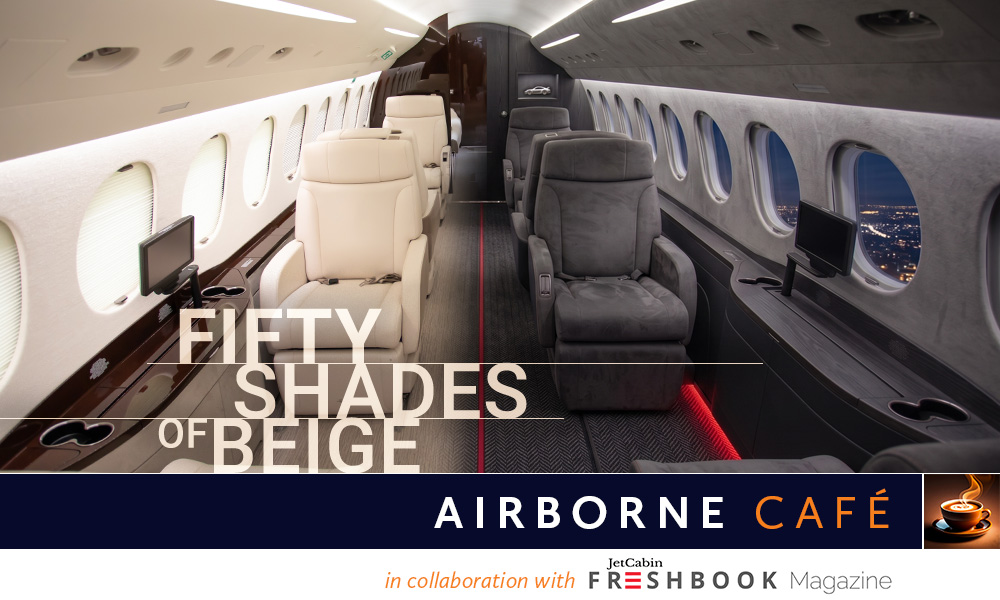
There was a point in your life when owning a private jet was the single coolest thing you could imagine. You might have drawn it with crayons and given it flames down the side, probably, or lightning bolts, or your name in letters big enough to read from the ground. You weren’t thinking about colour palettes. You were thinking about how unbelievably, impossibly brilliant it would be to have your own jet.
Fast forward a few decades of work, risk, ambition and the kind of determination that most people talk about but never actually sustain, and the moment arrives. You’ve done it. The lifelong aspiration becomes a reality, and it’s everything your eight-year-old self dreamed of.
And then somebody mentions resale value.
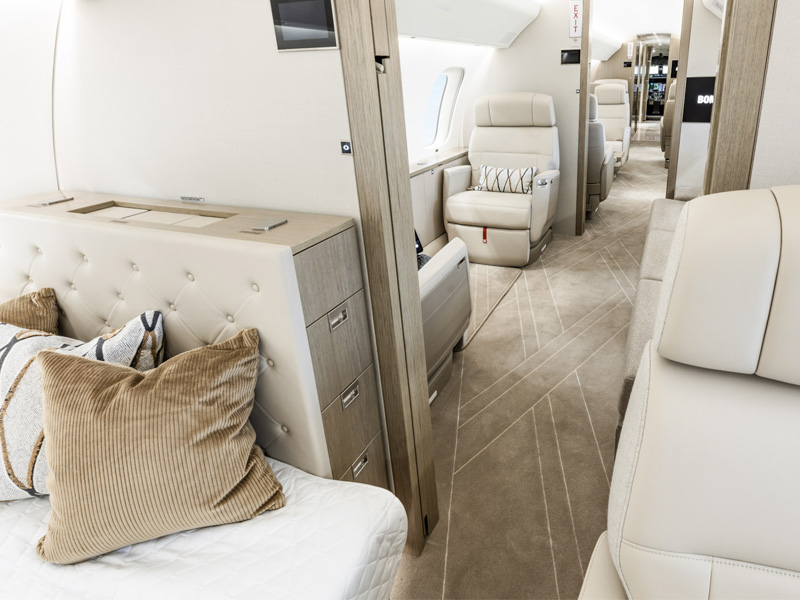
“Have you considered a neutral palette? It’s really the wisest approach for when you come to sell.”
You haven’t even taken delivery yet. You’re mid-signature on the most exciting purchase of your life, and someone is already selling it for you. To a hypothetical future buyer who doesn’t exist, for a transaction that’s perhaps a decade away. But somehow the advice lands, maybe because it feels inevitable. After all, you’ve got to be sensible about this type of thing, haven’t you?
So you nod, agreeing with the advice to go with calming tones and a “timeless” finish. You end up with a cabin the colour of a Harley Street waiting room and a livery with two horizontal stripes, because, apparently, that’s what people do and what future buyers are looking for.
Your inner child didn’t survive the meeting.
This happens more often than you’d think – to the extent that some OEMs have refined the resale conversation into an art form. It goes something like this: the client mentions an idea, or tentatively suggests something with a bit of personality, in a colour that isn’t extracted from a mushroom. The salesperson nods thoughtfully. “We can absolutely do that,” they say. Then they quote a figure so eye-watering that the idea quietly dies on the spot and the original catalogue options start looking perfectly reasonable again. It’s not a refusal – perish the thought – but it is a price tag that functions as one. Call it the “I’d rather not” tax, invoiced at two million dollars and suddenly the inconvenience of incorporating something non-standard simply… goes away.
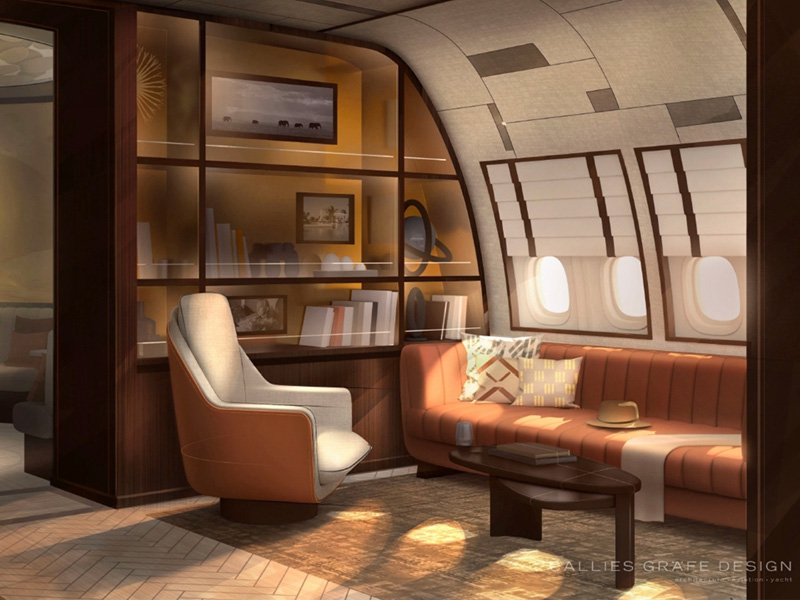
The result, across hangars and tarmacs worldwide, is a fleet of some of the most extraordinary machines ever built, individually worth tens of millions, collectively representing the absolute pinnacle of aerospace engineering. And most of them look like they were decorated by the same hotel chain.
But how did we get to the point where we barely even notice it, let alone question it? There’s a big difference between understated and boring, and somewhere along the way the industry forgot where the line falls.
Understated is a carpet that becomes a wave, moving through the cabin until it breaks gently onto a beach in the forward lounge. Or maybe a small partition, a pony wall, that conceals a Scotch bar behind a discreet button. Nothing conspicuous or ostentatious, just a quiet piece of engineering brilliance that makes you smile every time you press it. Understated is Alcantara seats with a single racing stripe down the aisle because the owner drives a Porsche GT3 and wanted his cabin to feel like his – not like everyone else’s. Boring is grey on beige on grey on beige. The type of colour palettes designed to be so wilfully inoffensive that it goes full circle and manages to offend through sheer absence of character.
None of these details involve recapturing a carnival ambience on-board, or even committing to robot themed décor. But all of us have, at one point or another, used that spark of imagination to capture a long-held sentiment or desire in our adult lives. Something completely unnoticed by anyone else but, for you, a representation of something precious in a way that delivers a small wave of happiness and satisfaction each and every time it catches your eye.
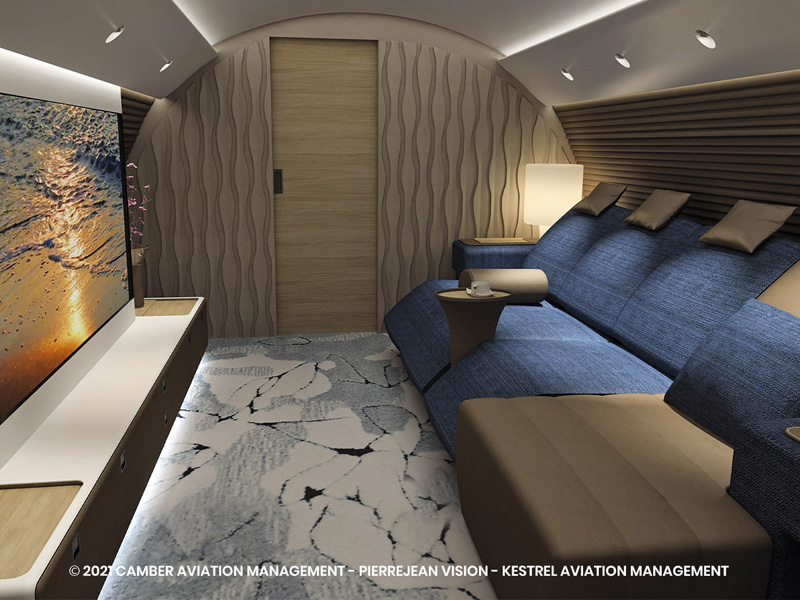
Maybe it’s a custom humidor, built in the same wood as the cabinetry, or backlit stone flooring that catches the light as you walk. A bulkhead finished in fabric with a texture you actually want to touch. Maybe it’s an espresso machine weighing sixty pounds that makes the perfect cup of coffee.
Because you’re the person who cares about perfect coffee, and this is your aircraft so why on earth wouldn’t you?
None of these are an extravagance. Instead, they’re the difference between a cabin that fulfils a function and a space you genuinely enjoy being in. The gap between an aircraft that could belong to anyone and one that could only belong to you. And crucially, none of them prevent you from being understated. But they do prevent you from being forgettable – which, when you think about it, is a far worse outcome for a multi-million-dollar investment than a bold carpet choice.
And the resale argument, if examined honestly, really is a strange piece of logic. You’re going to spend the next eight to ten years flying in this aircraft. Operating costs will run into the millions, just considering fuel, crew, maintenance and hangar fees. And somehow, against that backdrop, there’s a suggestion that you should sacrifice a decade of personal enjoyment to protect an incremental fraction of the resale value. At best, it seems… disproportionate. At it’s worst, it’s a very expensive way of ensuring your aircraft feels like a rental.
And if the concern is genuine – if, at the end of those ten years, a buyer really does prefer neutrals – then it’s worth remembering that a cabin refresh is a fraction of the aircraft’s value. You can change a carpet. You can recover seats. You can repaint the exterior for less than the operating cost of a single transatlantic crossing. The idea that today’s interior is permanent and irreversible simply isn’t true. What is true is that you’ll never get those ten years back.
Part of the problem is imagination, or rather, the difficulty of resurfacing it. Most people can picture what they don’t like but considerably fewer can articulate what they’d love. Especially when the canvas is an aircraft cabin and the possibilities are genuinely unlimited. It’s one thing to know you want something different; it’s quite another to describe, in specific terms, what “different” looks like when you’re staring at a material swatch book the size of a phone directory.
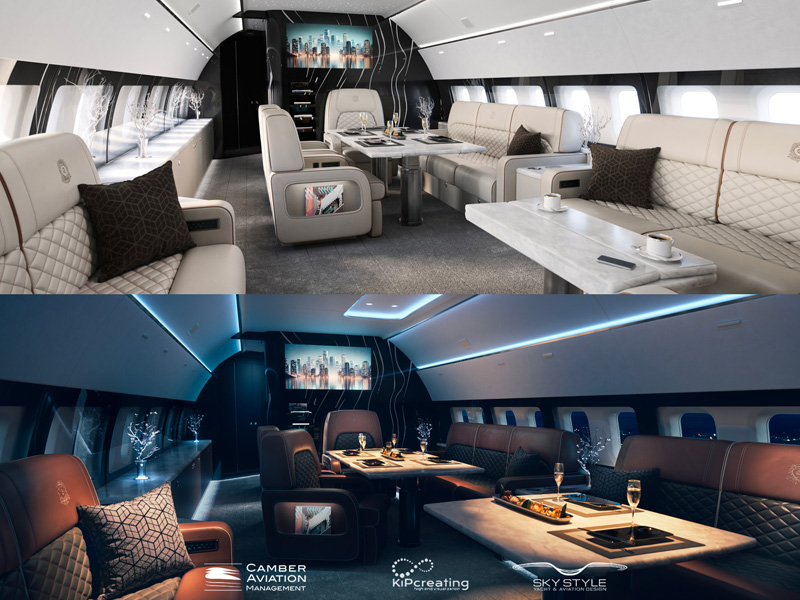
This is where the industry has actually moved enormously in the owner’s favour. Digital scanning and 3D visualisation mean that an idea doesn’t have to stay abstract. A cabin can be modelled, textured, lit and walked through before a single piece of veneer is cut. You can see the wave carpet. You can see the backlit stone. You can stand – virtually – in a space that represents exactly what you’ve imagined, adjust what doesn’t work and commit with confidence to what does. The technology that was supposed to streamline the completion process has an unexpected secondary benefit: it gives owners the ability to be brave, because they can see the result before they take the risk.
After all, it takes a certain kind of person to build the sort of career that ends with a private jet on the tarmac. It takes vision, and nerve, and the willingness to back your own judgment when easier options were available. The aircraft itself is evidence of every one of those qualities.
So why – having demonstrated all of that – would you choose a cabin that looks like it was designed by committee?
Live a little. It’s your’s, so make it feel like it.
You can read the full May issue of JetCabin Freshbook Magazine here »